Study flags risks in mummified remains sold online
Thirteen of 128 posts showed visual signs that might be fungal growth. With no physical tests, the study identified no microbes or market prevalence.
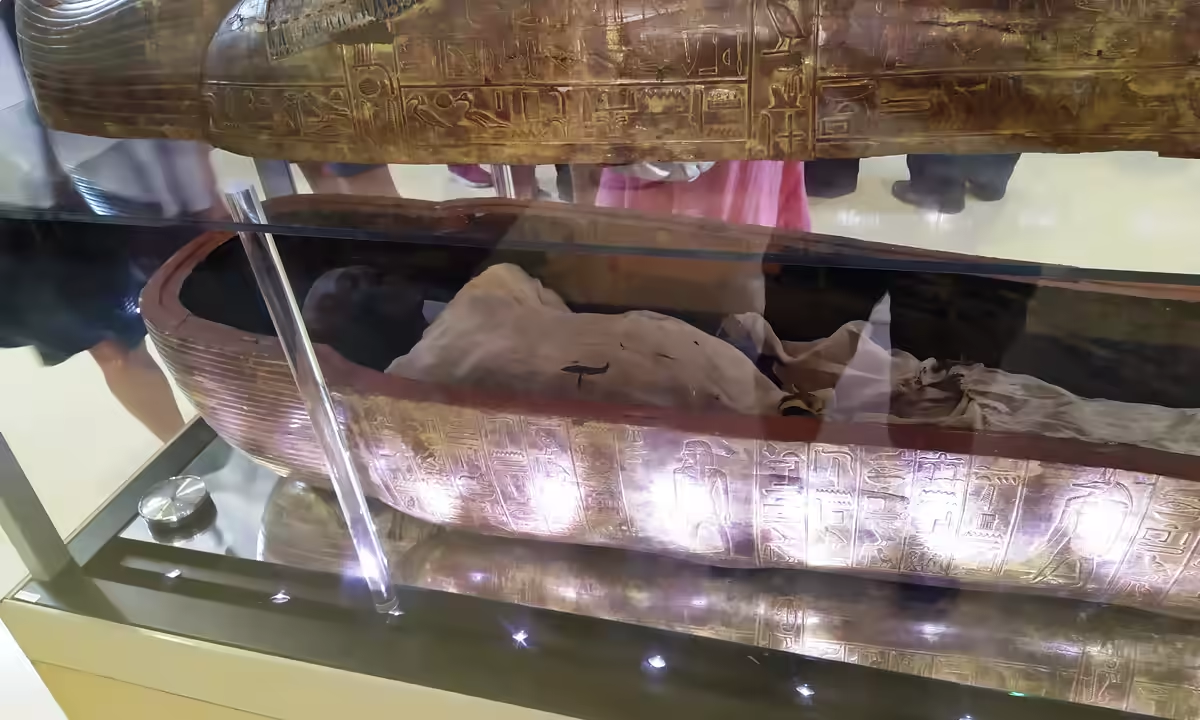
A study published August 5 in the International Journal of Cultural Property examined 128 online posts or auction lots containing mummified remains. Thirteen entries showed what the authors classified as possible fungal colonization, and eight of them advertised items for sale. The team had no physical access to the remains and collected no samples, so it confirmed no fungus or other microorganism.¹ ²
The finding exposes a biosafety gap hidden by the format of an online listing. Preserved remains may carry substances used during embalming or later collection treatments. Poor storage can also support microbial activity. The study found visual warning signs and missing safety information; it did not establish that each item was toxic, infectious, or capable of causing illness.¹ ²
The sample documents cases, not the size of the market
Researchers gathered posts from Meta platforms, e-commerce sites, online stores, and auction houses. The main 2015–2025 dataset was assembled opportunistically through monitoring and searches rather than a systematic sweep of every platform.¹ ²
Figure 1's time-series panels also include four earlier entries—one from 2011, one from 2013, and two from 2014—plus one record with no associated year.²
Of the 128 records, 122 contained human remains and six involved animals. The dataset mixed sales listings with posts in which collectors displayed an item. Isolated parts such as hands and feet were the most common category, while more than half of the sample involved heads in different states of preservation or completeness.¹ ²
Those figures describe what the team found. There is no denominator for calculating how much of the online trade was captured, how many objects were sold, or how prevalent hazardous items might be. The paper also says the number of posts is too small to establish a statistically meaningful trend over time.²
A year with more visible posts may reflect changes in monitoring, profile visibility, or access to public groups. Private accounts and deleted listings remain outside the researchers' view. This is a collection of observed examples rather than a census.
A photograph can flag decay without identifying its cause
All 13 suspected cases came from Facebook posts. The authors recorded white, gray, yellow, or black spots and growths, along with areas visually consistent with biodeterioration. Eight of the 13 posts offered the remains for sale.²
The analysis stopped at the image. Researchers performed no swab, culture, microscopy, genetic sequencing, or chemical test. Photo quality also prevented them from distinguishing fungus from bacteria, yeast, or another change in tissue and associated materials.² The evidence supports a visual suspicion, not a microbial identification.
The same limit works in the other direction. A surface with no visible spot cannot rule out dormant spores or invisible chemical residue. That possibility comes from earlier research and conservation experience reviewed in the paper, not from laboratory testing of these 128 records.¹ ²
Historical preservation creates different hazards
The category “mummy” covers bodies preserved naturally and through artificial practices across many places and periods. Some 19th- and 20th-century embalming methods used toxic elements. The authors' review includes arsenic, mercury, and lead. Collections were also treated with pesticides over time to control insects.²
Those substances can persist, yet the online study tested no item for metals, pesticides, or preservatives. Incomplete provenance and a missing conservation history make risk difficult to assess from a listing. A known hazard does not prove exposure from a particular body.
Biological hazards follow another pathway. Bacteria, fungi, and yeasts may survive in dried tissue or recolonize it when humidity, temperature, and ventilation support growth. Moving material that carries spores can release them into the air.² The paper reviews this evidence to explain why professionals control the environment and assess each object before handling it.
The researchers measured no exposure among buyers, sellers, or delivery workers. They did not track symptoms, hospitalizations, or deaths linked to the posts. Historical accounts of illness after tombs were opened do not turn this visual survey into a clinical study.
Safety information did not travel with the listings
According to the authors, sales posts did not regularly explain how preserved remains should be stored or handled. Some images showed direct contact without the protections used by museum and laboratory teams.¹ ² ³ An institutional collection can usually consult provenance, prior treatments, and environmental records that an online listing may omit.
The paper also documented remains being sent domestically and internationally. One package conflicted with the carrier policy cited by the researchers.² The legal reach of that observation is narrow: laws governing trade, possession, and transport of human remains vary by jurisdiction, and the study did not conclude that every recorded transaction was illegal.
Potential exposure extends beyond the buyer. A parcel without adequate identification can pass through carriers, warehouses, and inspections without workers knowing that it contains preserved human or animal tissue. The authors call for clearer postal guidance and consistent enforcement without proposing one universal rule.¹ ³
Sources
- The real mummy’s curse: Health risks associated with the sale and trade of mummified remains · International Journal of Cultural Property · https://doi.org/10.1017/S0940739126100393 · Aug. 5, 2026
- The real mummy’s curse: Health risks associated with the sale and trade of mummified remains · Cambridge University Press · https://www.cambridge.org/core/services/aop-cambridge-core/content/view/FCE6E950ED8A6BEF310766AF1CF53DB4/S0940739126100393a.pdf/real_mummys_curse_health_risks_associated_with_the_sale_and_trade_of_mummified_remains.pdf · 2026
Show 1 more sourcesHide sources
- ‘Real mummy’s curse’ behind sale and trade of mummified remains exposed · University of Staffordshire · https://www.staffs.ac.uk/news/2026/real-mummys-curse-behind-sale-and-trade-of-mummified-remains-exposed · Aug. 12, 2026